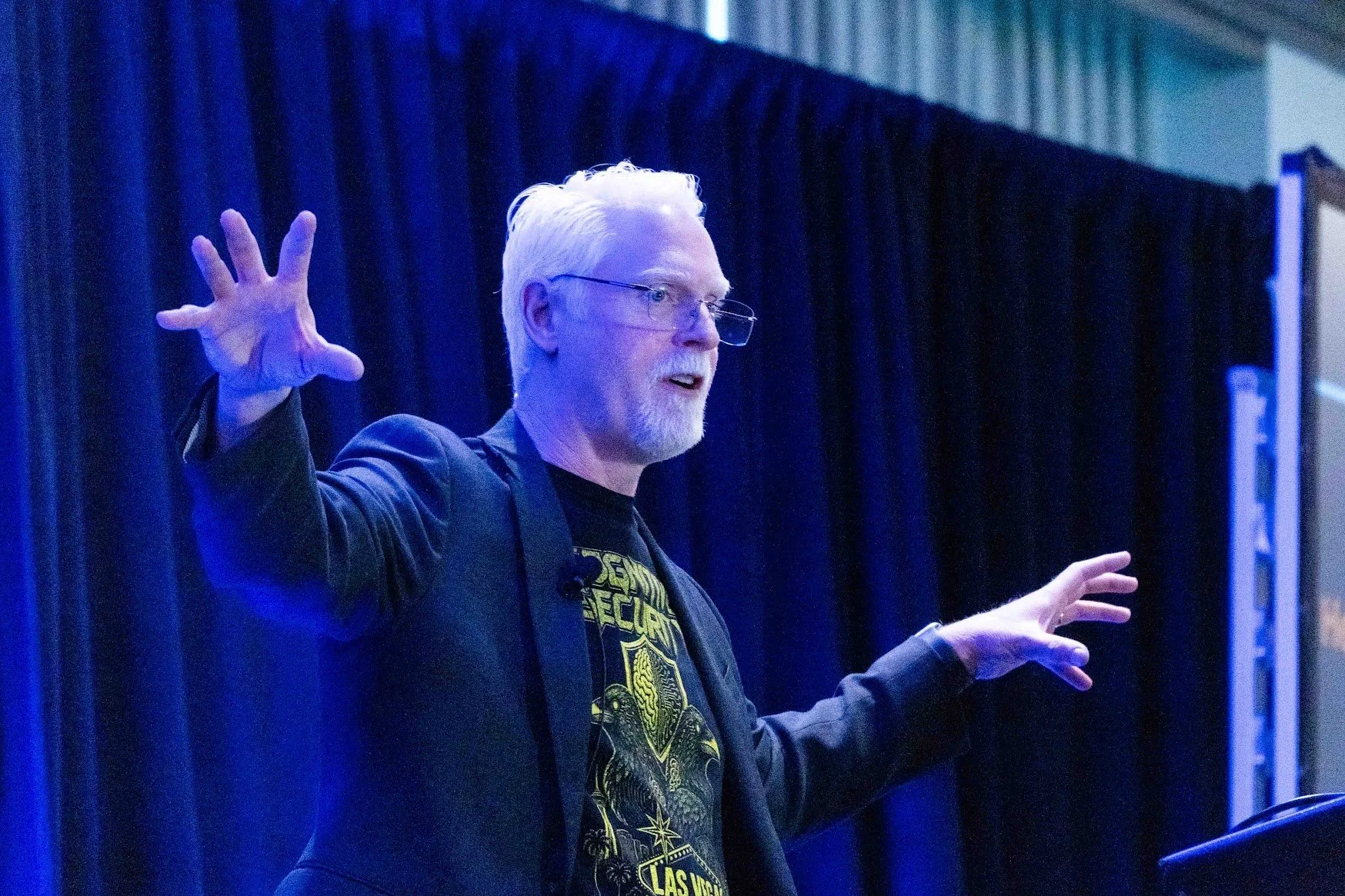
Cybersecurity strategist, author, researcher, and speaker exploring the human side of security and the evolving art and science of deception.


About Perry
Perry Carpenter has spent more than two decades exploring the human element of cybersecurity: how people perceive risk, make security decisions, form habits, respond to influence, and behave within the cultures and systems around them.
As Chief Deception Strategist at KnowBe4, Perry studies the intersection of human behavior, cybersecurity, and emerging technology. His current research focuses heavily on social engineering, artificial intelligence, deepfakes, synthetic media, scams, misinformation, and other forms of technology-enabled deception.
That work builds on a career devoted to security awareness, human risk management, behavior change, and security culture. Perry has helped shape industry conversations around moving security programs beyond information delivery and toward measurable changes in behavior, culture, and organizational resilience.
Security Awareness, Human Risk & Behavior Change
Perry’s work in human-centered cybersecurity began well before “human risk management” became a widely used industry term.
As a Research Director at Gartner, his areas of coverage included security awareness, security culture management, and anti-phishing behavior management, along with broader research supporting cybersecurity leaders and CISOs.
That experience led Perry to explore ideas from behavioral science, psychology, communication, storytelling, marketing, and organizational culture that could help security teams better understand why people behave as they do.
His first book, Transformational Security Awareness: What Neuroscientists, Storytellers, and Marketers Can Teach Us About Driving Secure Behaviors, brought many of those ideas together into a practical approach for creating security programs capable of influencing lasting behavior.
The book was subsequently inducted into the Cybersecurity Canon Hall of Fame, whose selections are intended to represent essential and enduring works for cybersecurity professionals.
Perry later co-authored The Security Culture Playbook: An Executive Guide to Reducing Risk and Developing Your Human Defense Layer with Kai Roer. The book expanded the conversation from individual awareness and behavior to the cultural forces that shape how people approach security across an organization.
A central idea connects this work: technology can create controls, while people ultimately operate within an environment of habits, incentives, assumptions, social pressures, and culture. Understanding those forces is essential to managing human risk.

Deception, Social Engineering & the Psychology of Influence
Perry’s research increasingly examines security through the lens of deception.
Social engineering succeeds by exploiting ordinary characteristics of human cognition: trust, attention, emotion, expectation, curiosity, authority, social proof, and our tendency to make quick judgments with incomplete information.
His work explores the techniques attackers use to create believable stories and the psychological conditions that allow those stories to become persuasive.
This has led Perry beyond conventional cybersecurity research into adjacent disciplines including cognitive psychology, behavioral science, persuasion, folklore, scams, magic, mentalism, propaganda, and the broader science of deception.
The same questions continue to surface across these fields. What causes someone to believe a story? What makes evidence feel convincing? How can attention be directed or manipulated? What happens when technology gives an attacker unprecedented control over the signals people rely on to determine what is real?
Those questions have become increasingly important as artificial intelligence changes the capabilities available to attackers.
AI, Deepfakes & Synthetic Media
Generative AI has dramatically expanded the scale and sophistication of technology-enabled deception.
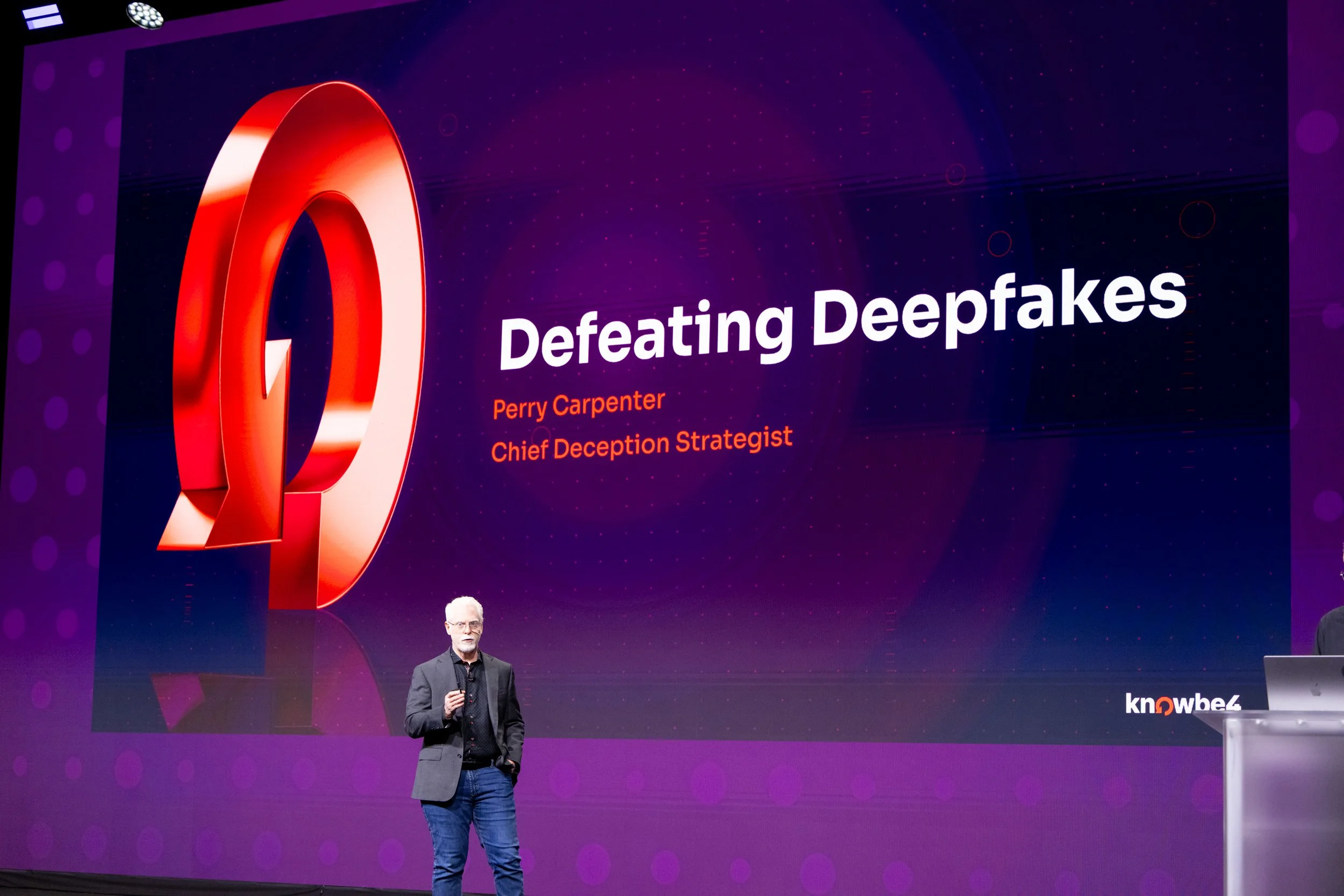
Perry researches and demonstrates emerging capabilities in deepfakes, voice cloning, synthetic media, digital impersonation, AI-generated scams, automated social engineering, and multimodal deception. His work includes hands-on experimentation designed to understand what current systems can accomplish, where defenses fail, and how attackers can combine technical capabilities with familiar psychological techniques.
At the 2024 DEF CON Social Engineering Village, Perry and his collaborators put an AI-powered voice phishing system into a live competition against experienced human social engineers. The AI system collected more individual objectives during its allotted time, demonstrating how quickly conversational AI, voice synthesis, and automation could alter the economics of social engineering.
His research has also examined the limitations of deepfake detection systems. In a 2025 CNN demonstration, Perry showed how relatively simple modifications could cause synthetic media to evade multiple detection tools.
Other demonstrations have explored real-time face replacement, voice cloning, synthetic video, and the ability to create convincing impersonations from publicly available media.
Perry’s 2024 book, FAIK: A Practical Guide to Living in a World of Deepfakes, Disinformation, and AI-Generated Deceptions, examines what these technologies mean for individuals and organizations attempting to make trustworthy decisions in an increasingly synthetic information environment.
Expert Commentary & Public Service
Perry is frequently invited to help organizations and the public understand emerging cybersecurity and deception threats.
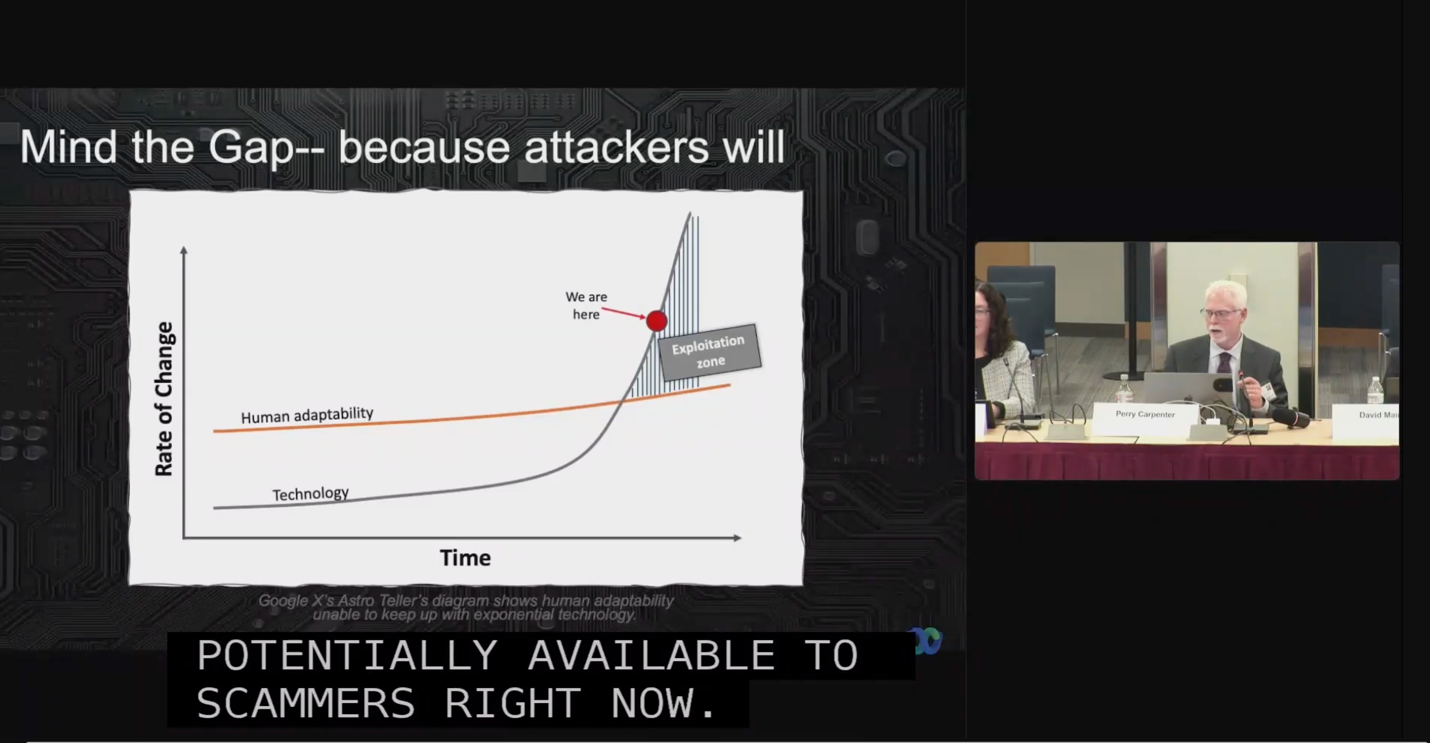
In March 2025, he addressed the U.S. Securities and Exchange Commission’s Investor Advisory Committee during its panel on retail investor fraud. His prepared remarks, AI, Deepfakes, and the Future of Financial Deception, examined how generative AI is increasing the accessibility, scalability, and persuasiveness of financial fraud.
His research and demonstrations have also been featured by media outlets including CNN, CBS/News 6, and PCMag, with coverage focusing on deepfakes, synthetic identity, AI-powered scams, and the growing difficulty of determining whether digital media can be trusted.
Across those appearances, Perry emphasizes resilience over reliance on technological “tells.” As synthetic media improves, trustworthy decisions increasingly depend on verification processes, context, and an understanding of how attackers manipulate narrative and emotion.
Speaking & Industry Leadership
Perry regularly speaks for cybersecurity audiences, corporate leaders, government organizations, and broader public audiences about the human element of security.
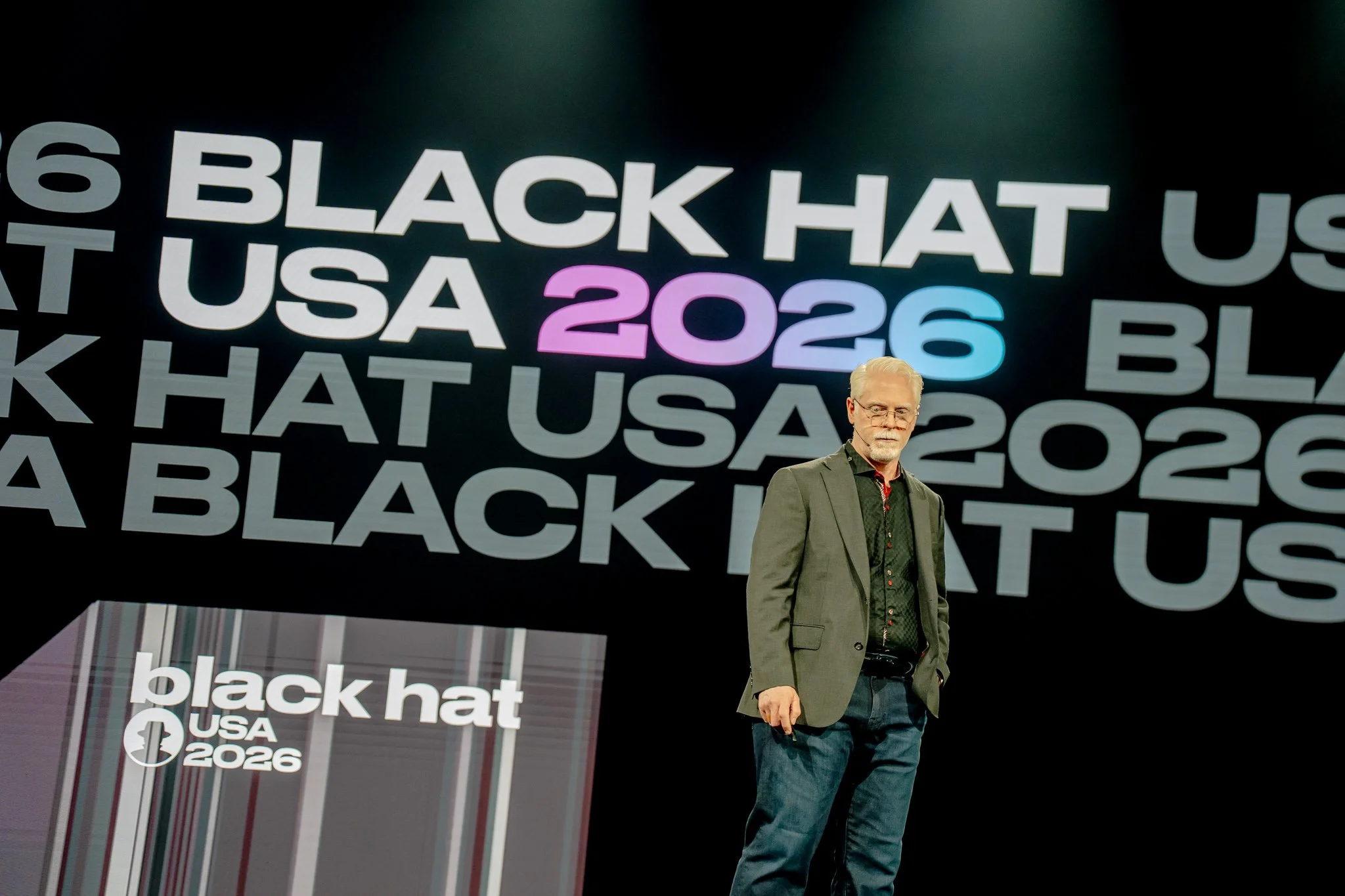
His presentations have appeared at major industry events including RSAC Conference, Black Hat USA, DEFCON, and National Cybersecurity Alliance events, along with corporate conferences and security leadership forums around the world.
His 2025 RSAC Conference session, Conversations with a GenAI-Powered Virtual Kidnapper (and Other Scambots), was recognized as a Top-Rated Session.
Perry also serves on the Board of Directors of the National Cybersecurity Alliance and participates in the Cognitive Security Institute’s Strategic Advisory Council, contributing to broader discussions around security awareness, human resilience, cognitive security, and emerging forms of manipulation.
In 2026, the Cognitive Security Institute named Perry its Voice of Cognitive Security, recognizing his work raising awareness of threats affecting human perception, judgment, and decision-making.

Books
Perry is the author or co-author of three books examining cybersecurity through the lens of human behavior, culture, and deception.
FAIK: A Practical Guide to Living in a World of Deepfakes, Disinformation, and AI-Generated Deceptions
Wiley, 2024
An exploration of generative AI, synthetic media, scams, disinformation, cognitive vulnerabilities, and strategies for navigating an environment where almost any form of digital content can be convincingly fabricated.
The Security Culture Playbook: An Executive Guide to Reducing Risk and Developing Your Human Defense Layer
Wiley, 2022 | Co-authored with Kai Roer
A practical guide for leaders seeking to understand and intentionally influence the cultural factors that shape security behavior and human risk.
Transformational Security Awareness: What Neuroscientists, Storytellers, and Marketers Can Teach Us About Driving Secure Behaviors
Wiley, 2019
A multidisciplinary approach to security awareness that applies insights from behavioral science, communication, storytelling, and culture change to the challenge of creating secure behavior.
Cybersecurity Canon Hall of Fame

Storytelling as a Tool for Learning and Behavior Change
Storytelling has been a recurring element of Perry’s work in security awareness, behavior change, and human-centered communication. His research has explored how narrative, emotion, sound, and other creative techniques can make complex ideas easier to understand and more likely to be remembered.
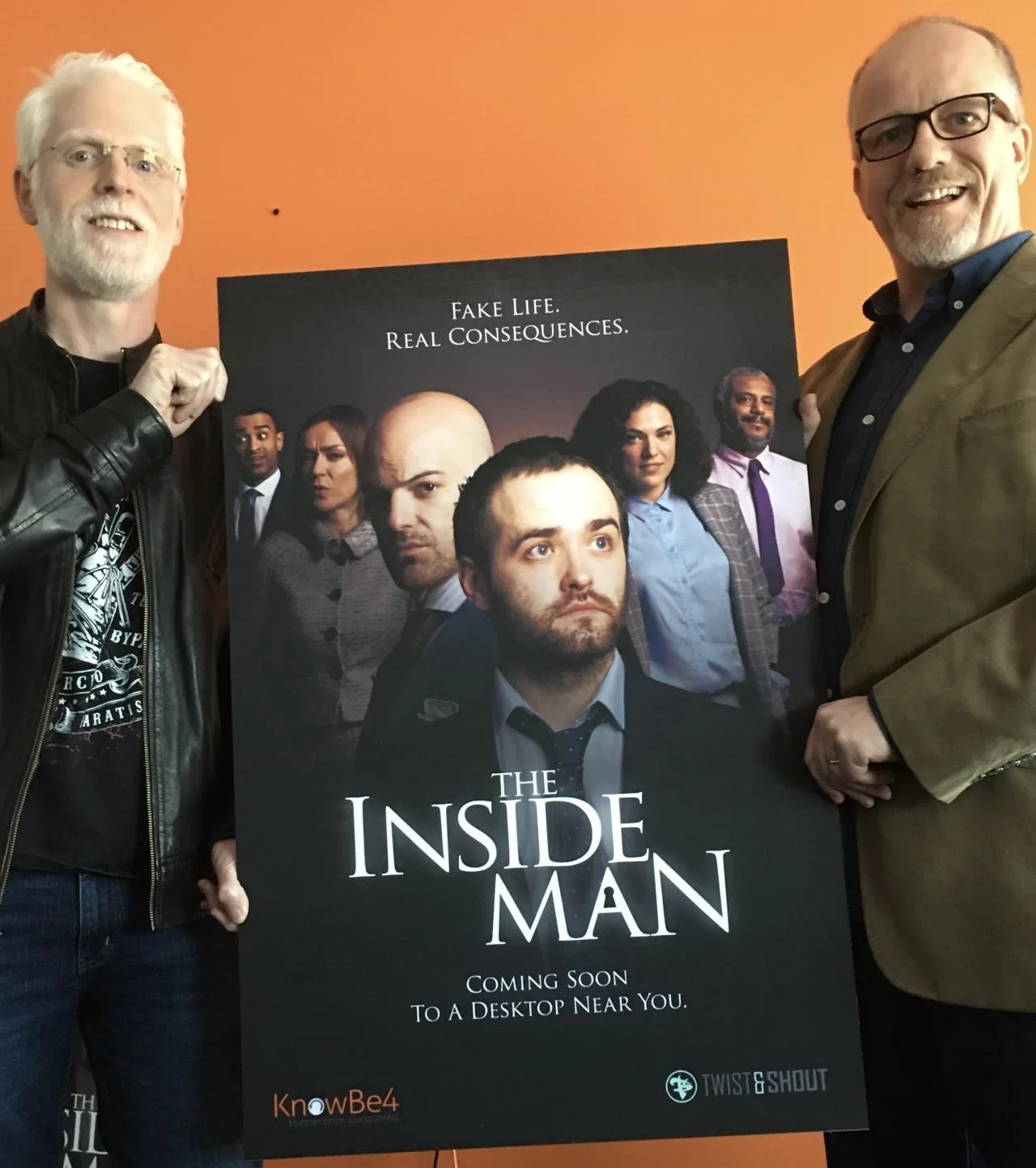
Perry helped create and serves as an executive producer of KnowBe4’s award-winning series The Inside Man, a seven-season cybersecurity drama developed with the creative team at Twist & Shout, later acquired by KnowBe4 Studios. The series approaches security awareness through continuing characters and storylines, using entertainment to explore social engineering, insider threats, cybercrime, and security culture.
Perry carried a similar philosophy into 8th Layer Insights, the podcast he created to explore the human layer of cybersecurity. Episodes combined expert interviews with creative production techniques, scripted segments, sound design, fictional scenarios, and narrative framing. Subjects ranged from cybersecurity and psychology to behavior science, communication, creativity, and culture. The format reflected an idea Perry has written and spoken about extensively: people are more likely to engage with information when communication earns their attention and gives abstract concepts human meaning.
That experimentation became even more ambitious with Digital Folklore, created with Mason Amadeus. The award-winning podcast blends documentary interviews and academic research with immersive audio fiction, original characters, voice acting, and an evolving fictional universe. Real-world ideas about folklore, belief, internet culture, technology, and human behavior unfold inside an ongoing narrative rather than a conventional interview format.
Story also became part of the architecture of Perry’s book FAIK. Every chapter opens with a fictional “Whispers from the Static” vignette designed to place the reader inside a plausible scenario involving deception, manipulation, or emerging technology before moving into the research and analysis behind it. Those stories were subsequently adapted into dramatized audio for a ten-part FAIK Files podcast miniseries, with each dramatization followed by a discussion unpacking the chapter’s themes and real-world implications.
Across video, audio, books, and live presentations, Perry uses narrative as a practical tool for communicating ideas about risk and human behavior. The approach grows from a principle central to his work in security awareness: information has greater opportunity to influence behavior when people pay attention to it, understand why it matters, and remember it when a real-world decision arrives.

Selected Recognition
Perry’s work has received recognition across cybersecurity, publishing, podcasting, and cognitive security.
Cybersecurity Canon Hall of Fame, Transformational Security Awareness
RSAC Conference Top-Rated Session, 2025
Voice of Cognitive Security, Cognitive Security Institute, 2026
Signal Award recognition, Digital Folklore
Board of Directors, National Cybersecurity Alliance
Strategic Advisory Council, Cognitive Security Institute
Invited testimony, U.S. Securities and Exchange Commission Investor Advisory Committee
Additional awards, media appearances, speaking highlights, interviews, and recognition can be found on the Press & Recognition page.
Areas of Expertise
Perry is frequently asked to provide research, commentary, presentations, and strategic insight on topics including:
Security awareness and cybersecurity behavior change
Human risk management
Security culture
Human factors in cybersecurity
Social engineering and psychological manipulation
Influence, persuasion, and the science of deception
Generative AI and AI-enabled cyber threats
Deepfakes, synthetic media, and digital impersonation
AI-powered scams and automated social engineering
Disinformation and misinformation
Cognitive security
Digital trust, authenticity, and verification
A Career Focused on the Human Side of Security
Technology continues to change the tools available to attackers and defenders. Human beings remain at the center of how trust is established, how decisions are made, and how deception succeeds.
That relationship between people, technology, and belief has shaped Perry’s work across security awareness, human risk, security culture, social engineering, artificial intelligence, and deception.
His research continues to explore a question that is becoming more important as technology evolves:
How do we make trustworthy decisions when the signals we have always relied on can be manipulated?